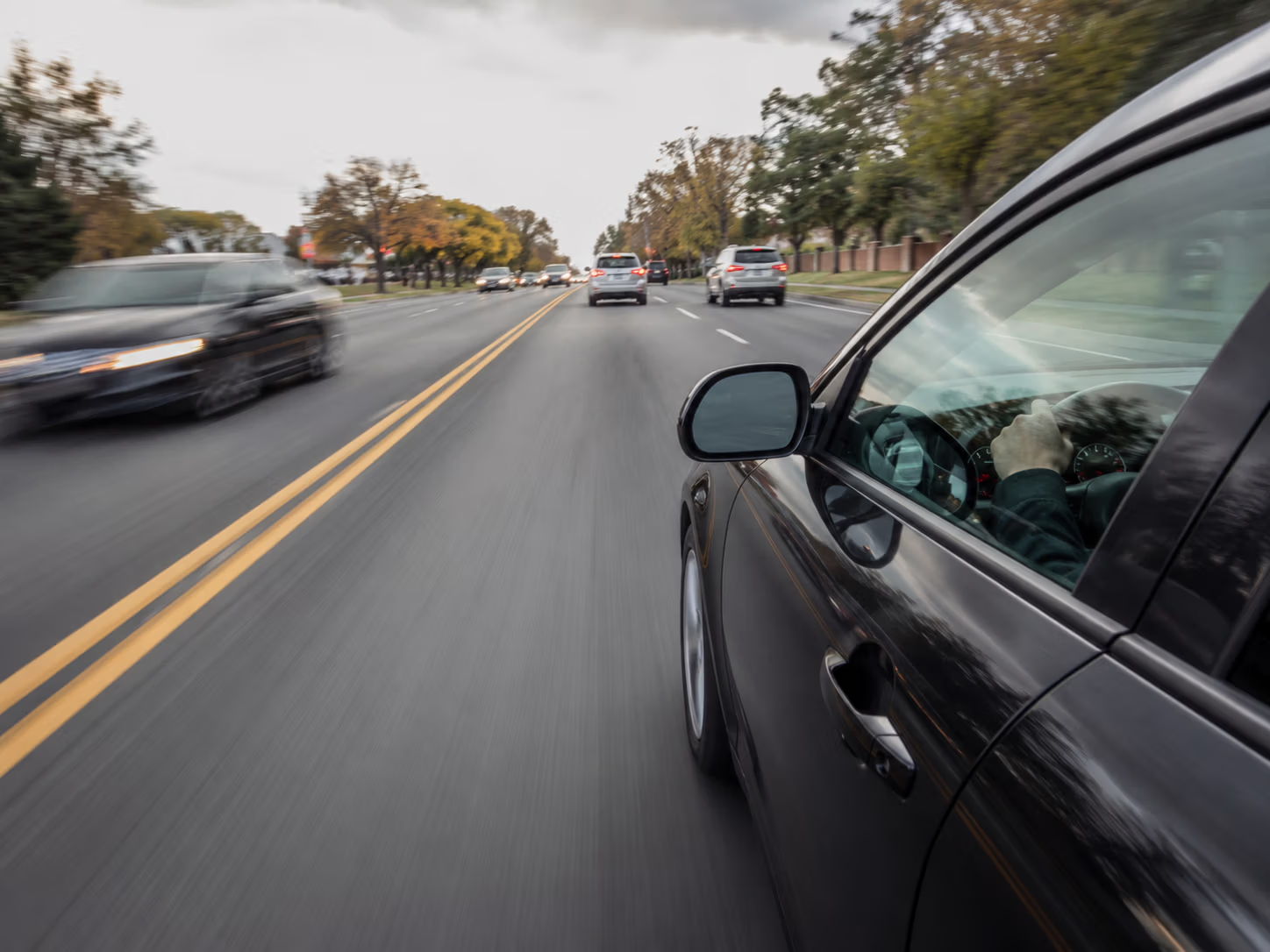
Evening rush hour may be one of the most dangerous times to drive in Virginia. According to data from the National Highway Traffic Safety Administration (NHTSA), fatal crashes in the state rise sharply between 5:00 p.m. and 7:00 p.m., the hours when fatigued, congestion, and hurried driving are more likely to occur.
The state of Virginia consistently ranks among the worst states in the nation for evening rush hour fatalities, with rates far exceeding the national average. At Keefer Law Firm, we believe that understanding these patterns is crucial to enhancing roadway safety and enabling drivers to make informed decisions about when and how they travel.

Virginia Evening Rush Hour Accident Stats
Evening rush hour (5-7 p.m.) is one of the most dangerous times to be on the road in Virginia. According to crash data from the National Highway Traffic Safety Administration (NHTSA), Virginia ranks third in the nation for fatal crash rates during this two-hour window. The numbers from 2018-2022 reveal how much higher the risks are compared to the rest of the country:
- Fatal crash rate: 27.0 per 100,000 licensed drivers, which is about 440% higher than the national average.
- Average fatalities from 2018 to 2022: 146.4 deaths per year.
- Deadliest year: 2022 with 173 fatalities.
- Lowest year: 2017 with 121 fatalities.
How Virginia Compares to the Rest of the Nation
With such figures, how does Virginia compare to the other cities or states?
- The U.S. average fatal crash rate during the evening rush hours is about 5 per 100,000 licensed drivers.
- Only New York (34.6 per 100,000) and Alabama (28.4 per 100,000) have higher rates than Virginia.
- States like North Carolina (18.2 per 100,000) trail behind, showing just how much Virginia stands out at the top of the list.

Virginia Vehicular Crash Data
While the raw figures above highlight Virginia’s high rate of fatal evening rush-hour accidents, the year-to-year data tells an even more important story. Between 2018 and 2022, Virginia’s crash fatalities rose by 43% in just five years.
This upward trend suggests that the problem isn’t static; it’s intensifying. Examining these numbers more closely over time helps reveal patterns in driver behavior, traffic conditions, and risks unique to the state.
Rising Overall Fatalities and Daily Crash Volume
According to the Virginia Department of Motor Vehicles (DMV), the Commonwealth reported 122,434 total traffic crashes, a 3.3% increase from the previous year, resulting in 1,005 fatalities, up from 968 in 2021 and 819 in 2018. This steady climb underscores a worsening trend that extends beyond evening hours.
Alcohol and Speed as Critical Contributors
The DMV recorded 6,910 crashes in 2022 that were alcohol-related, with 274 of these being fatal. Speed-related crashes contributed to 441 fatalities, while unrestrained occupants were involved in 375 deadly crashes. These factors are key drivers in the severity of evening collisions.
Urban vs. Rural Accident Patterns
According to emergency medical services in Virginia, 83.6% of motor vehicle crashes that occurred from mid-2021 to mid-2022 took place in metropolitan areas, while the remaining 16.4% occurred in rural regions. During this one-year period, 3.9 motor vehicle crash incidents occurred per every 1,000 people in metropolitan areas, and 4.8 incidents occurred per every 1,000 people in rural areas.
Day of the Week Accident Patterns
Not all days of the week have the same vehicular accident rates. Fridays have the highest number of motor vehicle crash incidents in both rural and metropolitan areas. Meanwhile, Sundays have the fewest number of traffic incidents in both areas.

Why the Evening Rush Hour Is So Dangerous
The evening commute is consistently one of the deadliest times to be on the road. According to the National Highway Traffic Safety Administration (NHTSA), the hours between 5:00 p.m. and 7:00 p.m. record some of the highest fatal crash rates in the U.S.
Several factors combine to make this timeframe especially hazardous:
Fatigue After a Full Day of Work
By the evening, many drivers are physically and mentally drained, slowing down their reaction times, worsening their decision-making, and significantly increasing the likelihood of drowsy or distracted driving. NHTSA notes that fatigue-related crashes spike toward the end of the day, compounding the dangers during rush hour traffic.
Congestion and Aggressive Driving
Evening rush hour sees the highest traffic density of the day as commuters head home, often in a hurry. In Virginia, crash data shows that aggressive driving behaviors, such as speeding, tailgating, and unsafe lane changes, contribute to a large share of evening collisions. The push to “beat traffic gridlock” often results in poor judgment, reckless driving, and road rage, all of which are major risk factors.
Reduced Visibility
Depending on the season, evening commutes often overlap with dusk or nightfall. Reduced visibility during this transition period makes it harder to see pedestrians, cyclists, or sudden changes in traffic patterns. In Virginia, NHTSA data shows that over 50% of fatal crashes in 2022 occurred in dark or low-light conditions, amplifying risks during evening hours.
Alcohol and Impairment
Evening hours mark the beginning of social outings and early drinking behavior among drivers. While late-night driving is more strongly linked to alcohol, impaired driving still accounts for a significant portion of evening crashes. In Virginia, nearly one-third of all traffic fatalities in 2022 involved alcohol impairment (driving under the influence), adding to the dangers of rush hour driving. If you’re charged with a DUI, you’ll need an experienced DUI lawyer to help get the charges dismissed or penalties reduced.
Stress and Distraction
The end-of-day commute also coincides with drivers multitasking, checking messages, thinking about dinner, or handling calls. Distracted driving remains a leading factor in Virginia crashes, with over 23,000 distraction-related crashes reported statewide in 2022, many of them during peak traffic hours.
The combination of fatigue, congestion, reduced visibility, increased risk of alcohol impairment, distractions, and careless driving makes the evening rush hour disproportionately dangerous. In Virginia, these factors result in a fatal crash rate more than four times the national average, underscoring the importance of exercising extreme caution during these hours.
What Drivers Can Do to Avoid Accidents During Rush Hour
The evening rush may be one of the most dangerous times to be on Virginia’s roads, but as a driver, you can take steps to lower your risk. Awareness, preparation, and safe driving habits make a meaningful difference.
Plan and Allow Extra Time
Traffic congestion during peak hours is almost guaranteed. Rushing or trying to “make up time” often leads to aggressive driving and unsafe lane changes. Leaving 10-15 minutes earlier before the rush hours can reduce stress and cut down on risky driver behavior and decisions.
Stay Focused
Distracted driving remains a leading cause of crashes in Virginia. Keep phones out of reach, use hands-free technology if necessary, and refrain from eating or multitasking while driving.
Watch Your Speed
Traffic flow can change suddenly, especially during rush hour. Maintain the posted speed (or slower in heavy congestion) to reduce the risk of getting a speeding ticket or being involved in motor vehicle crash incidents.
Be Extra Cautious at Intersections
Intersections are especially hazardous during rush hour, when stop-and-go traffic increases the likelihood of rear-end and angle collisions. Always anticipate that another driver may run a red light, and give yourself space to react.
Watch for Vulnerable Road Users
Evening hours often coincide with pedestrians leaving work, cyclists commuting home, and children out for after-school activities. Reduced visibility at dusk makes these road users harder to spot. Slow down and scan for motorcycles on the road, in crosswalks, on sidewalks, and in bike lanes carefully.
Drive Defensively
Assume not every driver around you is paying full attention. Keep a safe following distance, use your mirrors frequently, and avoid aggressive reactions to sudden lane changes or congestion.
Consider Alternative Routes or Timing
If possible, shift travel to before or after peak hours, or use less congested local roads. Some employers in Virginia offer flexible schedules or remote work options that can help avoid the most dangerous hours and most congested times.

Protect Your Rights After an Accident
Even the safest drivers can’t control the actions of others. During Virginia’s evening rush, accidents happen in a split second, and the consequences can be life-changing. If you or someone you love has been injured or involved in an accident, you don’t have to face the aftermath alone.
With decades of experience, Keefer Law is here to protect your rights, guide you through the legal process, and fight for the compensation and justice you deserve.
Take the first step today. Contact us for a free case evaluation.